Case Studies
This page presents a series of case studies that illustrate how social media influencers and political activists manipulate public opinion through emotional messaging, algorithmic visibility, aesthetic framing, and platform-specific strategies. Each case connects real-world examples to the academic research used in this project.
Case Study 1: TikTok Political Influencer – Emotional Aesthetics and Remixed Politics
TikTok has become one of the most influential spaces for political persuasion among younger audiences. Influencers often embed political messages inside humor, trending sounds, lip-syncs, and aesthetic edits. According to Sánchez-Querubín et al. (2023), political TikTok relies heavily on “performance, humor, and remix culture,” which makes political messages feel natural rather than explicitly persuasive.
A typical example is a TikTok creator who uses a trending audio track paired with text overlays criticizing a politician or policy. Because the content feels entertaining, viewers let their guard down, allowing the political message to slip in unnoticed. This creates what researchers call affective persuasion, where emotion outweighs factual reasoning.
Why this matters:
Emotional engagement on TikTok frequently leads to high algorithmic visibility, meaning political narratives spread quickly even when accuracy is questionable.
A TikTok-based political influencer video on YouTube: “Meet the TikTok influencer pushing Democrats to get ‘mean’.” YouTube
Face the Nation. (2025, February 3). Meet the TikTok influencer pushing Democrats to get “mean.” YouTube. https://www.youtube.com/watch?v=TycxwB7yW1M
Case Study 2: YouTube Commentators – Algorithmically Boosted Polarization
YouTube political commentators benefit from the platform’s recommendation engine, which rewards long watch times and emotional narratives. Kaur and Gupta (2023) found that “false information spreads faster than verified information,” largely due to content that is dramatic, fear-based, or morally charged.
Political YouTubers often use titles with emotional language, reaction-style thumbnails, and long-form commentary designed to increase engagement. Videos that produce emotional responses such as anger, fear, or outrage tend to be recommended more frequently, pushing the audience toward more extreme content over time.
Why this matters:
The recommendation algorithm creates a feedback loop where emotionally charged political commentary becomes more popular than nuanced or factual analysis.
A long-form video discussing how social-media influencers and platforms shaped a U.S. election suitable for analyzing YouTube’s recommendation and amplification dynamic.
Sky News. (2024, November 5). How TikTok and influencers have shaped the US election. YouTube. https://www.youtube.com/watch?v=4eRSeRtNr-Y
Case Study 3: Instagram Activists – Aesthetic Propaganda and Visual Framing
Instagram activists use infographics, slideshows, and “aesthetic politics” to convey persuasive messages. Rather than sharing text-heavy arguments, they use design-driven posts that simplify complex political issues into emotionally appealing visuals.
During elections or political crises, visually polished posts often go viral because they appeal to identity, values, and simplified narratives. Ku et al. (2026) suggest that when users lack the motivation or skills to critically analyze content, “simple design cues” can strongly influence what they believe or share.
Why this matters:
Instagram’s emphasis on visual appeal makes it easy for activists to spread oversimplified or misleading information packaged as educational content.
These are example Instagram-style infographics and slideshows that resemble activist/propaganda posts showing how visual framing can be used to present political or social narratives. (Because Instagram posts often are ephemeral or behind login walls, these are generic publicly visible examples rather than a single preserved post.)
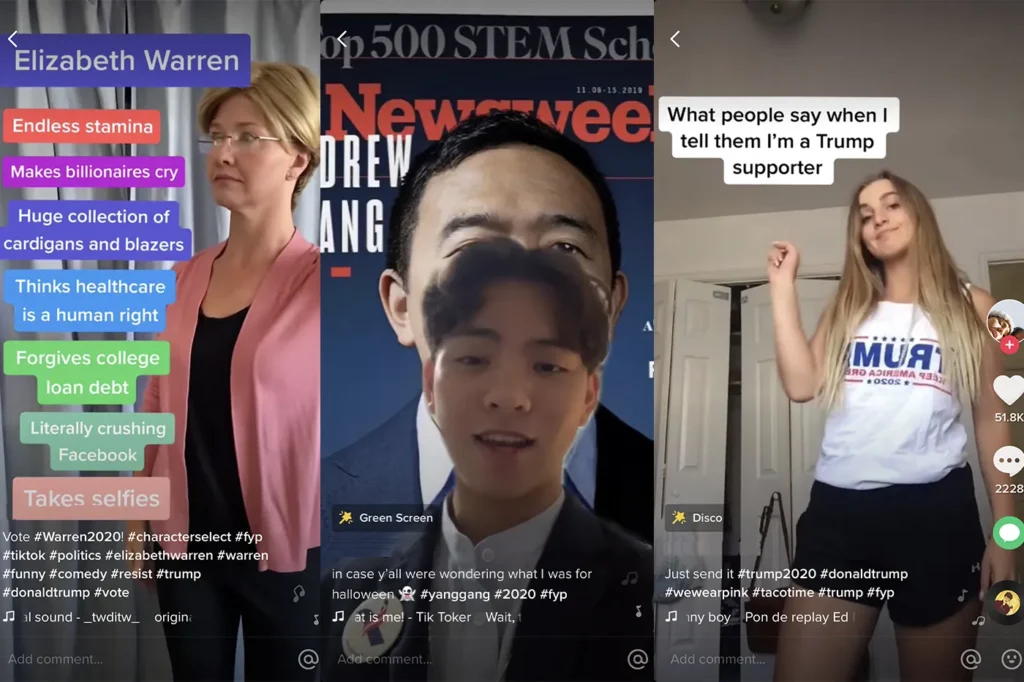
Source: Northeastern University News (2020)
Case Study 4: Fringe Influencers – Migrating Narratives into the Mainstream
Fringe political influencers often emerge from smaller platforms such as 4chan, Telegram, or niche YouTube channels. These creators produce antagonistic memes, conspiracy narratives, and exaggerated political claims that eventually filter into mainstream platforms.
Kaur and Gupta (2023) describe how misinformation “migrates quickly across platforms,” being reshaped and remixed along the way. When a fringe narrative reaches TikTok or Instagram, it becomes normalized through humor, aesthetics, and repetition.
Why this matters:
This pipeline helps fringe ideas gain legitimacy, influencing public discourse even among users who never visit fringe communities.
These images illustrate meme-style political content that plausibly migrates from fringe communities (forums / meme sites) to mainstream social media useful for studying narrative migration and cross-platform diffusion.
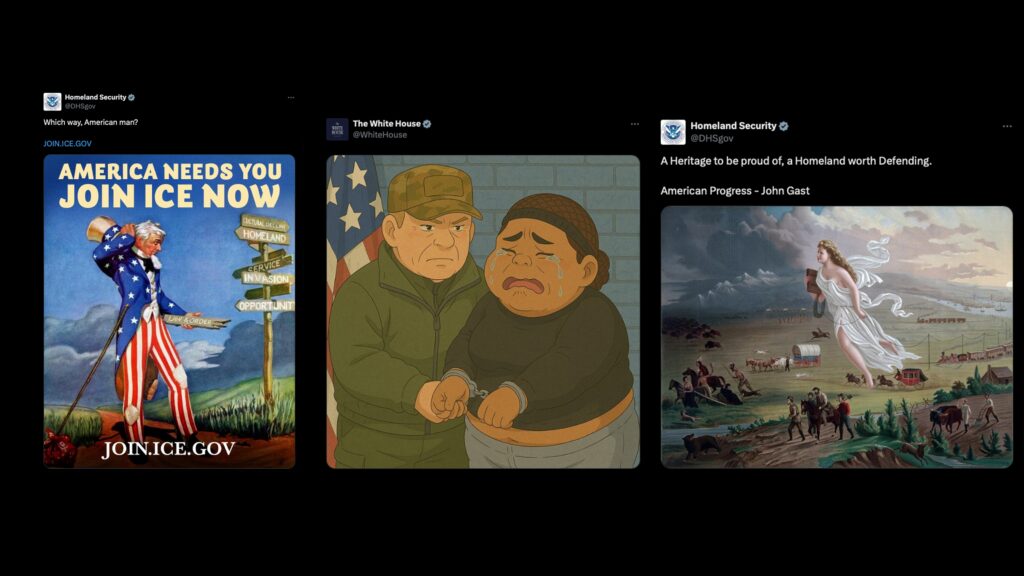
Source: https://en.wikipedia.org/wiki/Deportation_in_the_second_Trump_administration (2025)
Case Study 5: Health Misinformation Influencers – Overconfidence and Pseudoscience
Health misinformation follows similar patterns to political misinformation. During the COVID-19 pandemic, Khullar (2025) found that a small number of influencers were responsible for the majority of antivaccine content online. These influencers built trust by presenting themselves as experts, even without formal qualifications.
They often used:
- emotionally charged stories
- misleading statistics
- anecdotal “evidence”
- attacks on institutions
These tactics created the illusion that their content was more trustworthy than official health guidance.
Why this matters:
The same emotional persuasion and algorithmic amplification that drive political misinformation also drive health misinformation making both fields vulnerable to influencer-led manipulation.
CBC News. (2025, October 24). Exposing harmful health claims in TikTok videos | Marketplace | Full episode. YouTube. https://www.youtube.com/watch?v=74UVPTD6zZA
Case Study 6: Mixed-Platform Political Meme Creators
Political meme creators use humor and cultural references to spread partisan messaging. Their content spreads rapidly across platforms TikTok, Instagram, Reddit, and X often without attribution.
Because memes are short, emotional, and easy to share, they bypass critical thinking. Ku et al. (2026) showed that users often rely on intuitive processing when quickly scrolling through social media feeds, making memes highly persuasive.
Why this matters:
Political memes are one of the most effective tools for manipulating beliefs, especially when repeated frequently across platforms.
These are example political memes / image-macros with the kind of emotionally charged / share-ready format that tends to go viral. They show how memes travel across platforms and bypass deep scrutiny ideal for your “mixed platform meme creator” case.
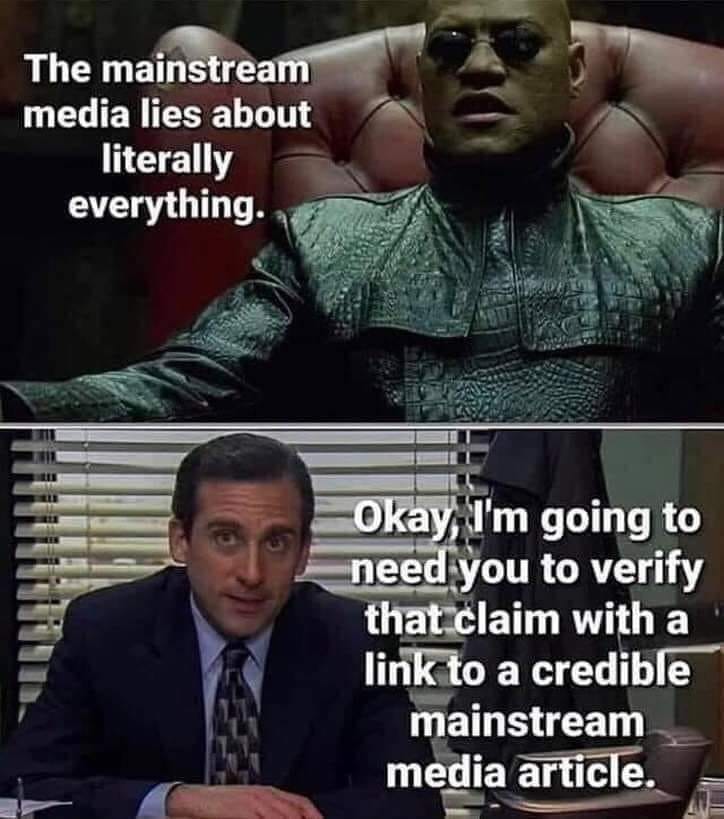
Source: up-north-values. (2016, September 17). @up-north-values · A Country Boy Can Survive. Tumblr. https://www.tumblr.com/up-north-values
Conclusion
These case studies demonstrate how influencers and activists manipulate public opinion by blending emotional persuasion, performance, design aesthetics, and algorithmic visibility. Across TikTok, YouTube, Instagram, and fringe platforms, similar patterns appear: persuasive content becomes viral not because it is accurate, but because it is emotionally engaging. By contextualizing real-world content through academic frameworks, this project reveals the mechanisms behind digital manipulation and encourages stronger digital literacy.